Skip to selected work

Senior Staff Product Designer

Francisco Guzman

I design consumer experiences and workflows, from startups to products used by billions.

Today I lead product design for Instagram Shopping as an IC. I set direction across teams and design key parts of the product. Before that I was Nuro’s first designer and Instacart’s second, after studying engineering and HCI at Stanford.

Instagram01

Design lead · 2020–2023, 2025–now

Making shopping work inside an app people don’t open to shop.

A dedicated shopping destination didn’t work. People open Instagram to be entertained, then shop when content inspires them. The job is to make that moment easy to act on.

Suggested shopping search

The reel suggests the search before anyone has to ask.

A tap opens products and related posts, and a follow-up search narrows the results. The hard call was whether the suggestion helped enough to interrupt the reel, and how specific it had to be to feel worth tapping.

I’ve worked on Shopping twice. The first time, I designed seller onboarding, then managed the team bringing shopping into Feed, Stories, Reels, and Live. Today I’m back designing the product, focused on making anything you see easier to shop.

Current scopeDesigning the product and setting direction across several teams

Business AI

A Story prompt becomes a private AI conversation.

Small businesses are strapped for time. Business AI was made available to millions of businesses on Instagram so people could get help deciding what to buy even when no one was available to reply. The chat clearly said it was AI before the first answer.

Creator monetization

Creators could tag products they found across the web in a reel.

That opened up products beyond Instagram’s catalog and gave creators another way to earn. They chose when each card appeared, so the product showed up at the relevant moment instead of relying on automatic tracking.

Seller onboarding

People could check out directly on Instagram.

Sellers could set up a shop in the Instagram app, through a web tool, or through Shopify. Their catalog and payment system still had to connect to checkout inside Instagram.

Shoppable formats

Shopping moved into Feed, Stories, Reels, and Live.

Feed could use a product tag. Live needed a card timed to the broadcast. Each format had to make products easy to reach without interrupting the content.

Nuro02

First product designer · 2018–2019

The vehicle was built, but the product wasn’t.

The team had a vehicle that could drive itself. No one knew whether the product was an ice cream truck you walked up to, something you hailed, or a fleet behind someone else’s app.

Customer handoff

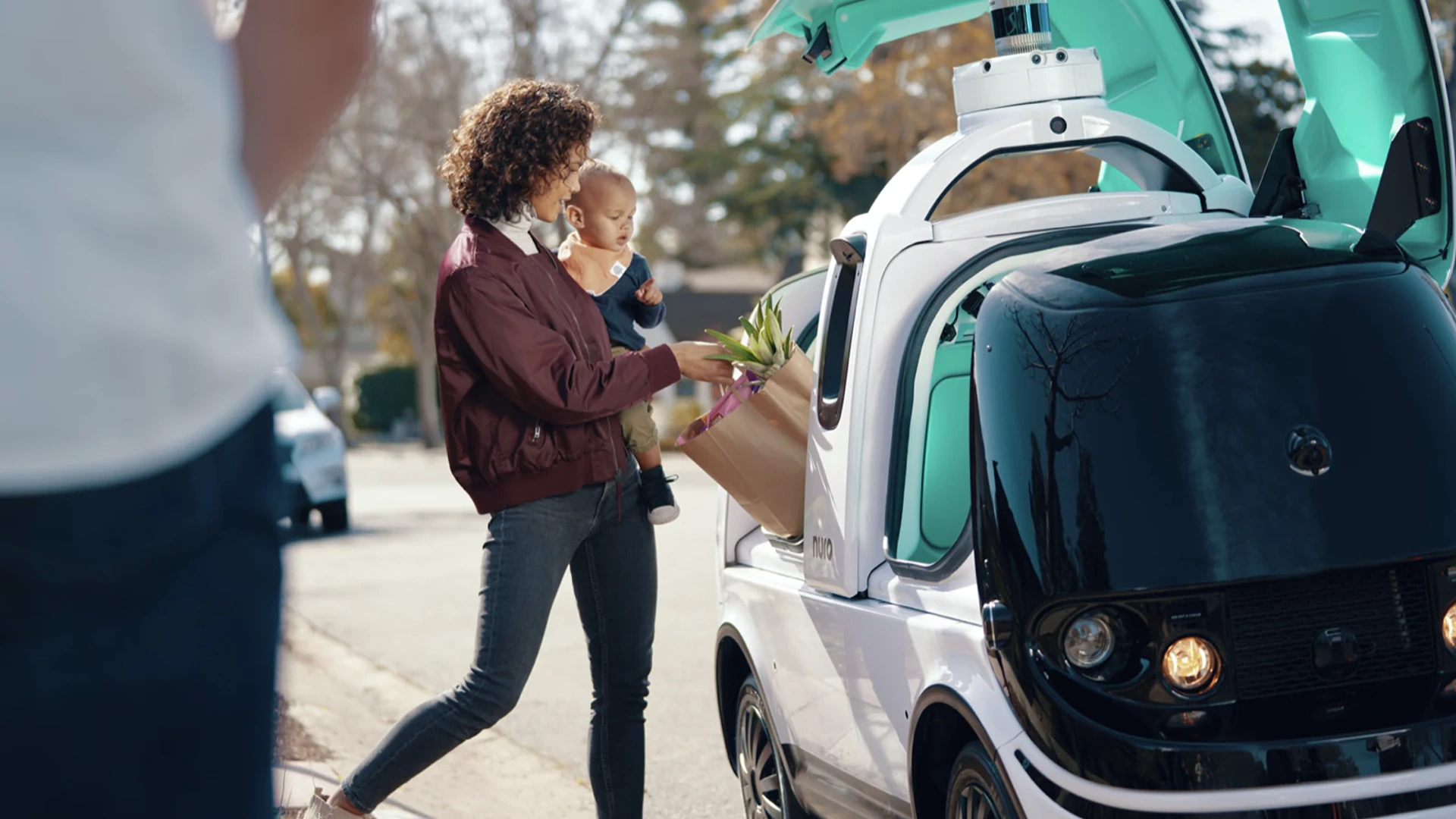
With no driver, the vehicle had to explain itself.

Customers had to find the right vehicle, open the right compartment, and know when the delivery was done without anyone there to help.

As Nuro’s first product designer, I worked on the customer app, vehicle interface, remote operations, fleet tools, and field research. That meant working directly with autonomy, hardware, operations, and engineering.

Remote vehicle startup

One operator could remotely start multiple vehicles from a single interface.

Previously, an operator had to plug a laptop into each vehicle and start it manually. The new interface showed every readiness check and exactly why a vehicle couldn’t start.

Grocery service pilot

A fully operational grocery delivery service tested our hypotheses in realistic conditions.

Real shoppers and drivers fulfilled customer orders, while a Nuro vehicle sometimes handled the final handoff. That exposed what the service needed before the vehicle could do the whole job.

Fleet scheduling

One schedule replaced the fleet’s Google Sheets.

The calendar put every vehicle, operator, and task in one place, from mapping runs to build tests. Each operator got a daily schedule. Later, it could suggest the schedule itself.

Field research

How the vehicle greeted you mattered as much as any screen.

Sessions in daylight, at night, and in the rain showed that people were nervous approaching the vehicle, especially the doors. Sound, voice, and the screen had to explain what was happening before anyone touched it.

Instagram03

Design lead · 2023–2025

Building a subscription worth paying for.

Meta Verified has one name but is really five products: a creator subscription and four business tiers, from $15 a month to about $500. Creators and businesses want different things, and every tier has to earn its price.

Links in Reels

Verification is what finally made links possible.

Instagram had rejected links for years because of spam and the risk that the app would lose its focus on media and become a billboard for the rest of the web. Only eligible subscribers could add them, and the experience kept links useful without bombarding people as they watched reels.

Instagram hadn’t sold its own subscription before, so the basics had to be built from scratch. I set the design direction for Instagram and worked directly on all the benefits. Designers across Meta and partner teams led detailed design on parts of the work, and Facebook adopted the same benefits.

Why people upgradedLinks in Reels became the top reason subscribers upgraded to a higher tier.

Why people paid

People were already paying other services to solve these problems.

The subscription helped professionals grow an audience, prove who they were, run an account with a team, and protect their work.

Notability

The badge stopped telling you who was notable.

Once anyone could pay for a badge, users needed a way to tell the well-known account from a lookalike. We explored a lot of ways to do this and landed on a simple follower count next to the name in search.

Shared accounts

Teams could share an account without sharing the password.

Big accounts had been sharing passwords. Now owners could add people, see what each person did, and keep messages and stories private unless they chose otherwise. Another designer led the detailed design. I set direction and reviewed the work.

Links on profile

Profiles got the link page people were already paying for elsewhere.

People were already paying link-in-bio services to turn one profile link into a page with several links. Instagram’s version became one of the top two reasons people signed up.

Original credit

The subscription paid for the part that needed a human.

Automatic detection ran for everyone. Subscribers could request a human review when another post reused their work. If the claim held up, the copied post was labeled with the original creator’s name.

Instacart04

Second product designer · 2015–2018

No one was designing the work behind the groceries.

When I joined, the customer side had a designer. The people doing the shopping had none, and in-store shoppers and drivers ran the whole operation on mobile web.

Fieldwork

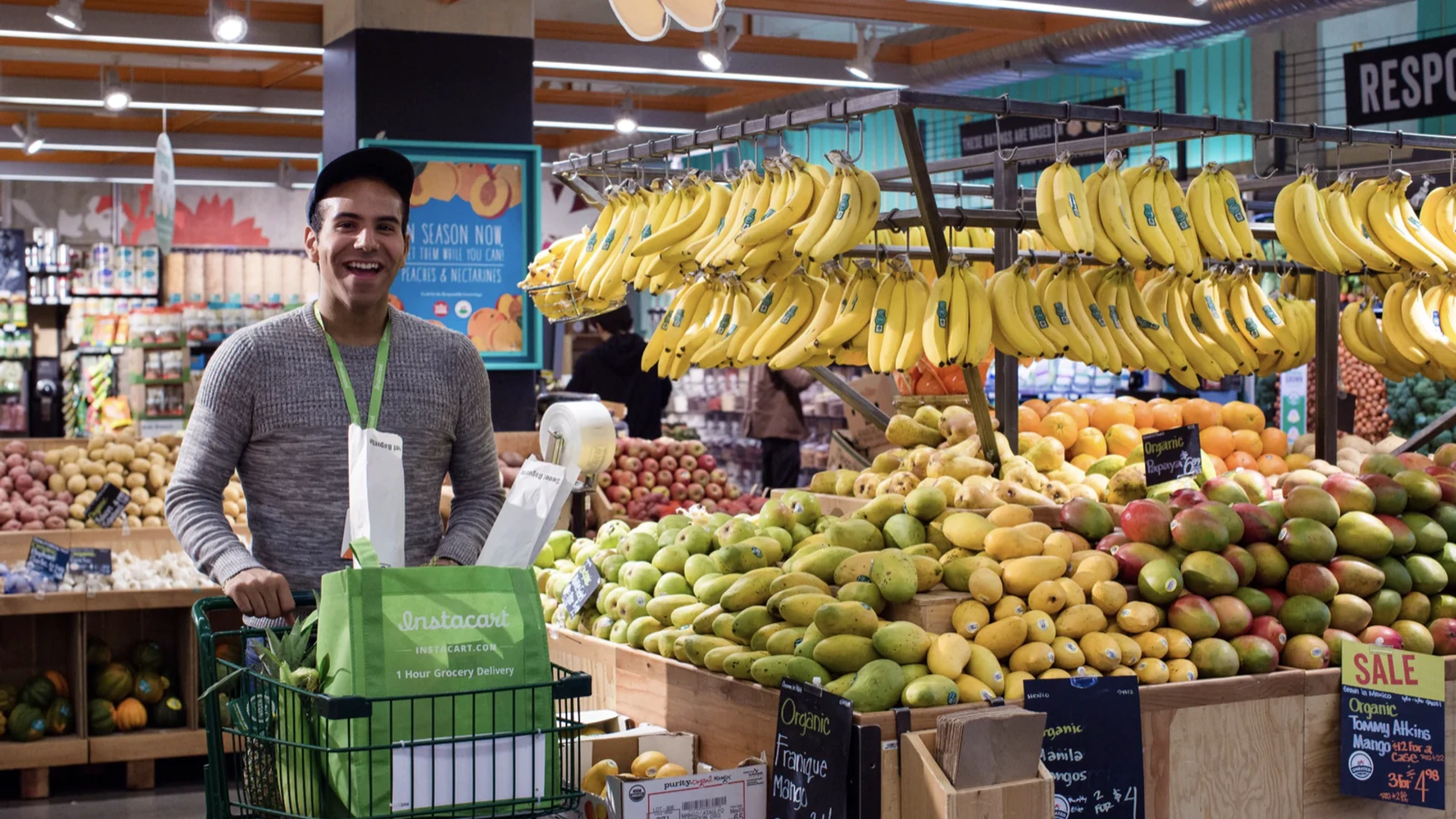
A real shopper shift exposed where the app slowed the job down.

That’s me in the aisle. A single order meant handling missing items, customer replies, payment, bag staging, and the handoff to the driver.

As Instacart’s second product designer, I focused on the people and tools that got an order from the store to someone’s door. Our team built the first native app for shoppers, drivers, and cashiers, plus systems for everything from applying to getting paid.

What changedA single order tracked the customer’s preferences, replacement decisions, bag staging, and the handoff to the driver.

Replacements

Replacements moved inside the order instead of stalling in a text thread.

Preferences already in the order let the shopper keep moving when an item was out of stock and the customer didn’t answer.

Shopper app

Past choices became replacement suggestions.

The app became the shopper’s list and map through each store. When an item was out, it suggested replacements from that customer’s history and what other customers had accepted.

End of the order

Barcodes turned the bags into a handoff between shopper and driver.

Picking was only half the job. Each bag was barcoded and its location recorded so a different person could deliver it.

Shifts and pay

The shopper app also became a scheduling and pay system.

Shoppers used the same app to set availability, pick up shifts, and see delivery pay and tips each week.

In-store fieldwork

At the butcher counter, three sausages mattered more than a weight.

Butcher and deli counters were among the slowest parts of a shop. The prototype carried the customer’s exact request into the store instead of forcing it into a standard quantity field.

I’ve led teams without leaving the design work behind.

I’ve managed twice at Instagram, leading teams of up to seven. I hired four designers and coached three to promotion. Today I’m an IC again, setting direction across teams that don’t report to me.

Instagram2020–now
  1. 2025–nowShopping · IC
  2. 2024–2025Meta Verified · Design lead manager
  3. 2023–2024Meta Verified launch · Lead IC
  4. 2021–2023Shopping, messaging, lead gen, and ads · Manager
  5. 2020Seller experiences · IC
Nuro2018–2019First product designer
Instacart2015–2018Second product designer
Prismatic2013–2014Interaction Designer
Stanford UniversityEducationMS Symbolic SystemsHuman-Computer InteractionBS Management Science & Engineering

Let’s talk.

I designed the site and wrote the content. Codex helped me build, test, and ship it.

Local time↑ Top